




TL;DR: In a new C1 Academy video, C1.ai VP of Product Erik Huckle traces how enterprise AI reached its current moment and what separates the companies putting it to real work from the ones still running pilots.
- Three eras in a few years: chatbots that could answer questions, copilots with a few pre-canned workflows, and now customizable agents, "this really fun era of unlocking the builders in any company."
- The era that changed everything is the third one, because the builder population exploded from engineering to the whole company.
- Blocking doesn't work. Companies that respond by banning AI get shadow AI instead, as employees deploy apps on personal machines to get their work done.
- The alternative is a governed path: a place to build, deploy, and share apps, with the sign-in and authorization those builders don't have on their own.
Every company has AI experiments. Far fewer have AI doing real, everyday work, and the gap between the two is the subject of the first video in C1 Academy's Building the Agentic Enterprise series, where Erik Huckle, VP of Product at C1.ai, lays out how we got here and what the companies crossing that gap are doing differently.
How did we get from chatbots to a company full of builders?#
Huckle's short history of enterprise AI runs through three eras. First came the chatbots, which he describes with no nostalgia: "fairly dumb, didn't have a lot to do, but they were novel in that they could answer questions in interesting and new ways that were different than Google search." Impressive to talk to, and largely inert as far as the enterprise was concerned.
Then came the copilots, agents with "maybe a few pre-canned tasks," a couple of out-of-the-box workflows for the sales or marketing team. The limitation was structural: "it didn't fit the size of the business or how folks worked. It was a one-size-fits-all era."
The third era is the one we're in now, and it's qualitatively different. The agents got smarter and far more customizable, and suddenly "all sorts of builders across the enterprise are thinking about different ways to put it to work." The sales team is assembling dashboards, marketing is building analytics, and in Huckle's words it's "this really fun era of unlocking the builders in any company." The significance isn't the technology, it's the demographics: the builder on your network now sits in sales ops or finance as often as in engineering. We've written before about what that does to the identity surface; this video is about what it does to strategy.
Why doesn't blocking AI work?#
Because the demand side doesn't go away. Huckle describes the fork directly: a company can declare that its AI policy is "you can't build apps and agents here," and what follows is predictable, "because folks want to get work done, and if their security and IT team is going to block them, they'll deploy those apps right on their personal machines, get a different computer, and find all different ways to get around that." The result is a proliferation of shadow AI: usage the company can neither see nor secure, with company data following the work out the door. The policy produces the exact exposure it was written to prevent.
A ban is a bet that your employees value policy compliance over getting their work done faster. That bet loses.
What are forward-looking companies doing instead?#
Taking the other path at the fork. The forward-looking companies in Huckle's telling are standing up "a marketplace or an app deployer," a sanctioned place where functional groups can build, deploy, and share their apps, and the results speak for themselves: "they've been unlocking a lot of growth and velocity inside companies."
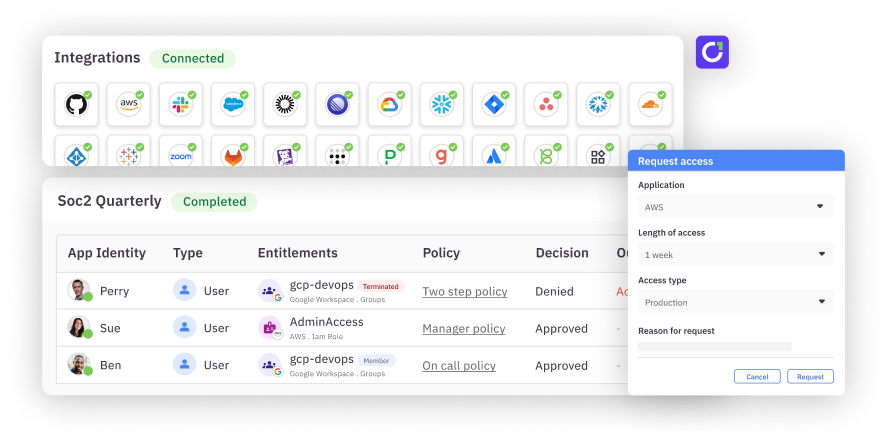
The catch is that a sanctioned environment is only as good as its foundations, and this is where he's candid about the gap: "a lot of those app builders don't yet have all the primitives that you'd normally think about in a security or IT team. Sign-in, authorization, all those things." That's the layer C1.ai supplies: sign-in and authorization for the apps and agents people build, a hub for deploying and sharing them, and discovery for the ones that got built before the governed path existed. Make the secure way the easy way and the builders choose it on their own; it's the same argument as security being the engine, not the brake.
AI experimentation is table stakes now. Putting AI to work is a decision about where your builders build.
Watch the full video on C1 Academy, then see how C1.ai gives your builders a governed path.