


C1 Transform 2026 agenda

October 5–6, 2026 · The Clancy · San Francisco
October 5–6, 2026 · The Clancy · San Francisco
to
The Clancy — Courtyard
to
Reception
C1.ai office
620 Folsom St Ste 100, San Francisco
Passed appetizers, cocktails and music at the C1.ai office. Meet the people you'll spend Tuesday with before the first keynote.
The Clancy, San FranciscoAll times Pacific
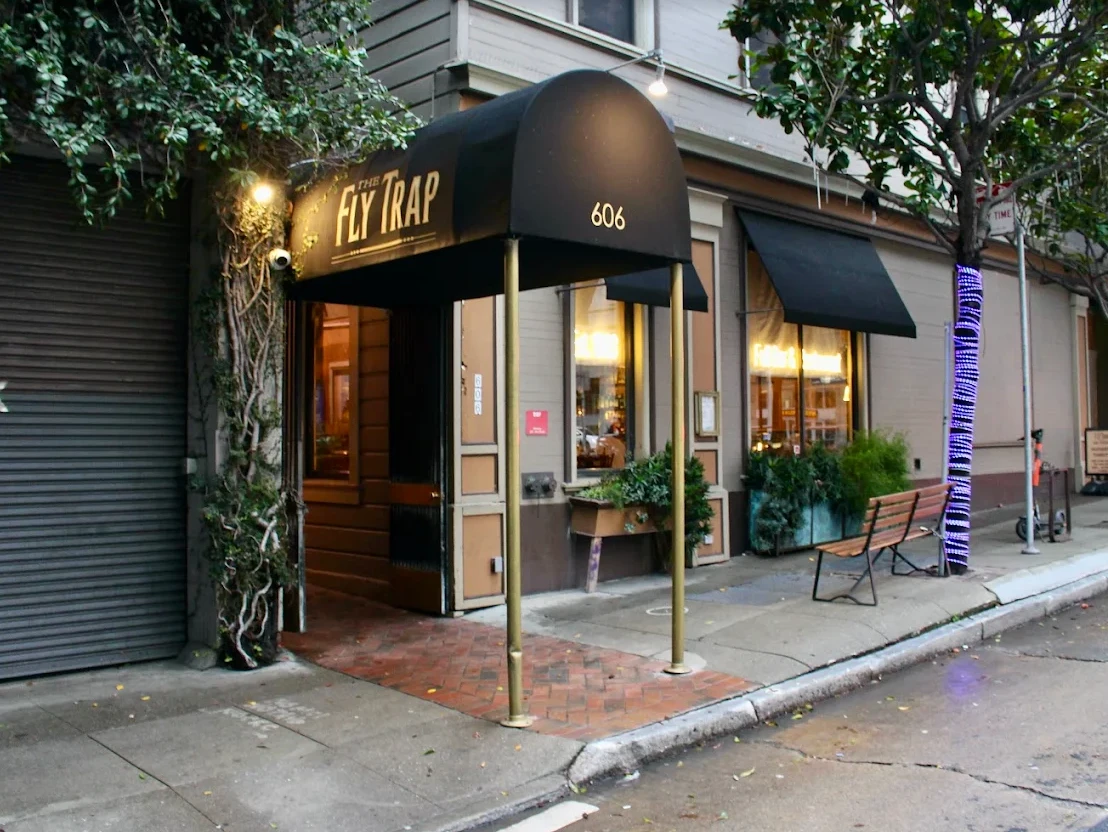
606 Folsom St, a short walk from The Clancy
Need a moment of zen, a refreshment, or a quiet place to take a call? The Fly Trap is yours all day, with rotating bites and drinks on hand whenever you need them.
to
The Clancy — Courtyard
to
Alex Bovee, Co-Founder & CEO, C1.ai
to
Karl McGuinness, former Chief Product Architect, Okta
Paul Querna, Co-Founder & CTO, C1.ai
Agents act on valid credentials long after the work they served has ended. The fix is to govern the work, not the credential: one durable, revocable Mission that outlives the tokens projected from it. Not a correct agent, a survivable one. When the agent is wrong, what still holds?
to
Justin Pagano, Sr. Director, GRC Engineering, Vanta
The AI revolution is upending organizations' security and GRC programs. Shadow AI is exploding as employees adopt new agent harnesses, workflows, platforms, and plugins. Even sanctioned AI poses new challenges that don't yet have standardized solutions. This session will break down what AI Governance is all about, cover common concerns that it's meant to resolve, and provide attendees with practical tips for solving some of their most pressing AI Governance challenges. You'll learn what AI Governance entails, from practical policy to active protections, and how to solve AI Governance concerns across different layers of the AI stack.
to
Time to recharge. Stretch your legs, grab a coffee or something cold, and fuel up on snacks before we head back to the main stage.
to
Ivan Burazin, Co-Founder & CEO, Daytona
Teams reach for Kubernetes to run agent sandboxes because it's the default for running containers. But Kubernetes is built to keep workloads alive in a steady state, and an agent sandbox is born, forked, and killed before that machinery catches up. Ivan Burazin ran the same 50-action bug-fix trajectory across five stacks and measured a 12x spread: 12.9 seconds on the fastest, 161.5 on the slowest. That gap is lifecycle overhead per action, not compute. This session breaks down the mechanism behind the number and how to evaluate your own stack against it.
to
Travis McPeak, Head of Security, SpaceXAI
Talha Tariq, CTO (Security), Vercel
Will Bengtson, CISO, C1.ai, Moderator
Every vendor is selling security teams an AI story. Cut through it with a working framework for where AI actually belongs in the security stack, where it's a distraction, and what the highest-leverage moves are for teams in the next 12 months.
to
Step away from the main stage and go deeper on the topics that matter to you, trade ideas, and connect with fellow industry leaders over a good meal.
to
Rochelle Mattern, Head of Field Engineering, Together AI
Kris Murphy, Technical Product Manager, NVIDIA
Erik Huckle, VP of Product, C1.ai
Enterprises are moving off frontier APIs to open models and dedicated deployments for data residency, cost, and latency. That move puts every access and audit question on their own team. Over lunch, Rochelle Mattern, Kris Murphy, and Erik Huckle talk through what breaks first when you run inference yourself, whose credentials your agents are using, and what evidence holds up when an auditor asks what an agent did.
to
Dusty Evanoff, VP Cyber Defense, Tenex.ai
Every security team is being told AI will transform detection and response. Fewer are talking about which parts hold up under production load. Dusty Evanoff shares what his team has learned running an AI-enabled MDR service across a wide range of customer environments: the workflows where agents deliver real speed, scale, and quality, and the ones where they quietly add overhead. He covers how to tell the difference, the anti-patterns worth avoiding, and what is worth building first.
to
Àyodélé Àbéjídé, Principal Engineer, Brex
Paul Querna, Co-Founder & CTO, C1.ai
Brex wanted open-source agents in production. Security wanted controls. Nothing on the market fit. Human-in-the-loop broke at 100 requests per second. Proxies couldn't read the payload. API keys were too coarse. So Brex built CrabTrap, an open-source gatekeeper that uses an LLM to evaluate what an agent is actually trying to do and reject the request when it doesn't hold up. A look at the design decisions, the dead ends, and the moment the guardrail caught an agent trying to modify itself to cover its own mistake.
to
Sam Bisbee, VP Information Security, DraftKings
Kevin Paige, Field CISO, C1.ai, Moderator
Access decisions have outgrown the humans making them. Human identity, device identity, workload identity, policy, and behavior — too much context to hold in one head, at a pace no queue can match. The service desk becomes the exception path. The evaluation moves into policy. The metric shifts from approvals granted to time to complete. And when an agent acts on a human's behalf, that's an access decision, not a feature.
to
Time to recharge. Stretch your legs, grab a coffee or something cold, and fuel up on snacks before we head back to the main stage.
to
Chi Zhang, Co-Founder & CEO, Kite AI
As AI agents take on a greater role in economic activity, enterprises need a trusted foundation for delegating authority, managing budgets, and enabling agents to transact. This session explores how AI-native infrastructure brings together identity, governance, coordination, and payments to support agents as economic actors, while keeping human oversight and accountability at the center.
to
Derek Chamorro, Head of Security, Together AI
Agentic AI has outrun enterprise visibility, and this talk shows how a self-hosted telemetry layer that normalizes usage across every AI surface, attributes each session to a verified identity, and never persists prompt text turns that blind spot into working controls for exfiltration detection, credential governance, spend anomalies, and fleet health.
to
Sachin Malhotra, Member of Technical Staff, Anthropic
Over the past year, AI coding agents went from autocomplete to writing a growing share of the code on my team's infrastructure — and my job changed more than I expected. This talk covers what that actually looks like day to day: root-causing a production incident from my phone, the handful of habits that make agents genuinely useful, shipping a production service in a language I don't know or write, and what on-call feels like when the status updates write themselves. The bar for what ships hasn't moved; where the time and the judgment go has indeed moved a lot.
to
Alex Bovee, Co-Founder & CEO, C1.ai
to
The Fly Trap
606 Folsom St, San Francisco
Drinks, food, and the rest of the conversation. A short walk from The Clancy.
C1 Transform 2026
October 6 · The Clancy, San Francisco