Secure AI access
in seconds
Self-service access to every AI tool, agent, and MCP for your team. Full governance for security.






Faster access. Full audit.
Request to access in seconds. Every MCP call captured with full identity. Zero standing privileges for AI agents.
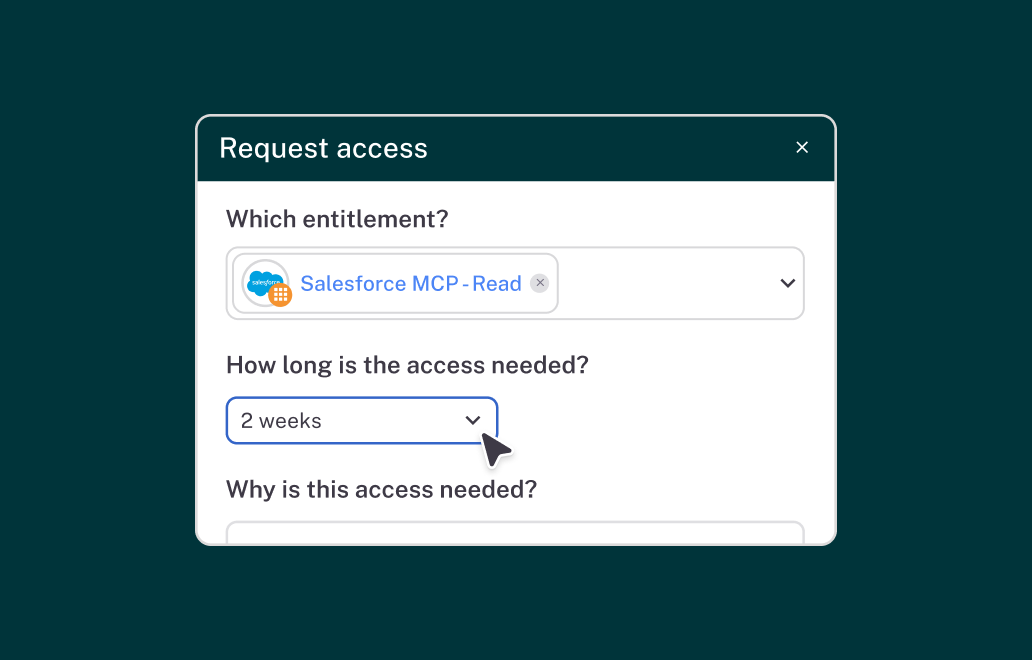
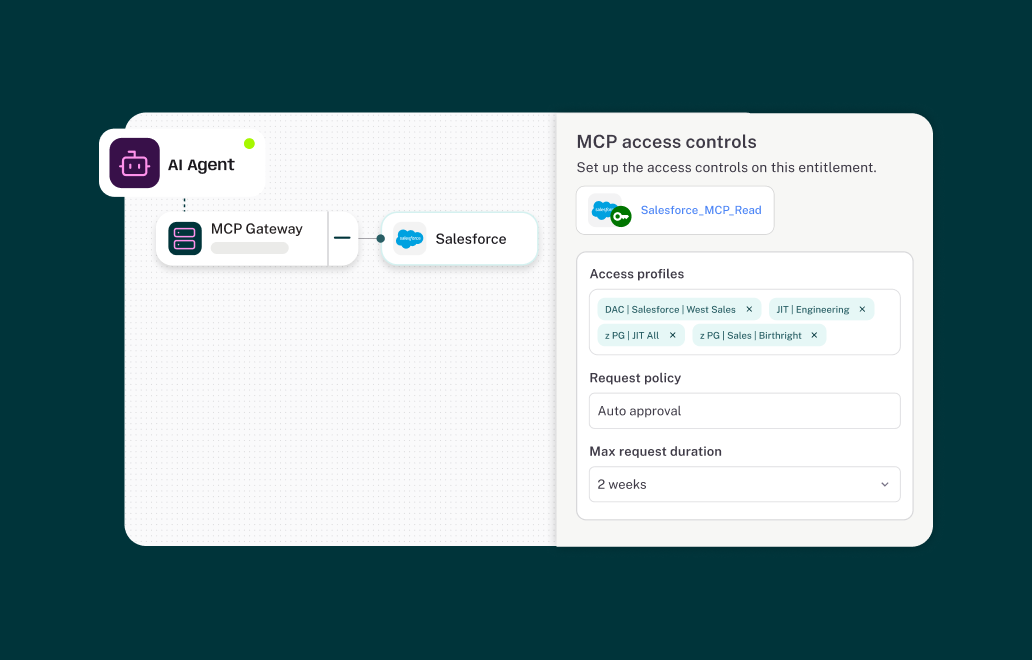
Self-service MCP access in Slack, Cursor, or CLI
Your team gets the tools they need without filing a ticket. Request access from inside Claude Code, Cursor, or Slack — policy auto-approves in seconds. Works with any MCP server, any auth model.
Real-time policy on every MCP tool call
Stop risk before it runs, not after. An identity-aware gateway enforces tool allowlists, parameter restrictions, and output redaction inline — and steps up for sensitive actions. Hardens against tool poisoning, confused-deputy attacks, and supply-chain MCP risk.
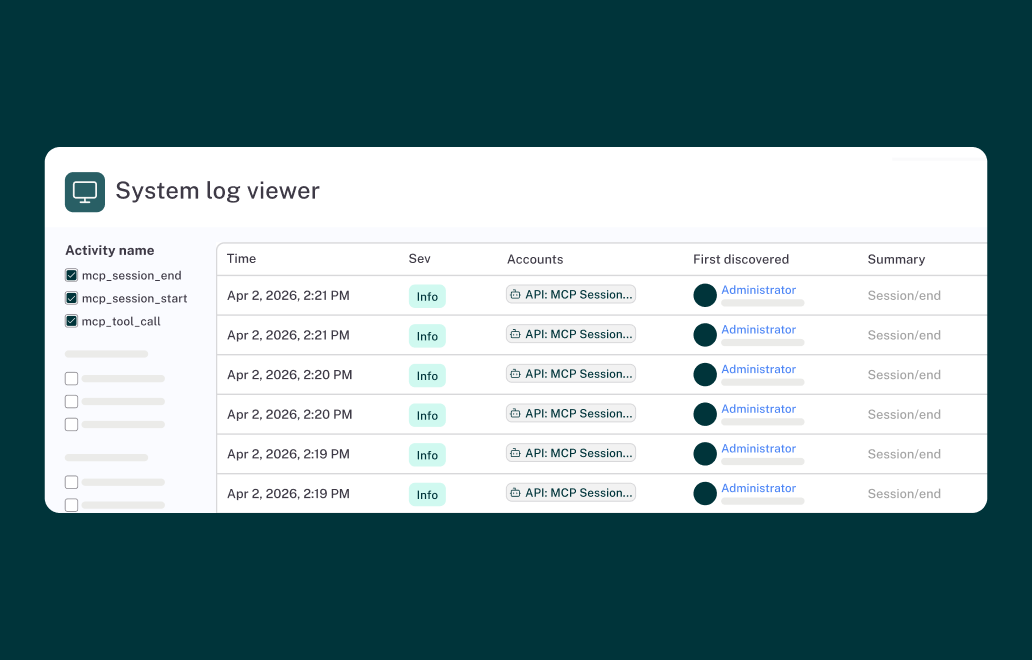
Audit data your teams actually use.
User, agent, tool, parameters, policy outcome — captured for every MCP call and streamed to your SIEM, SOAR, or data lake. Security ops pulls the call chain on an alert. GRC exports the evidence packet on demand. Threat hunters chase an anomaly to its source. Auditors verify you have it.
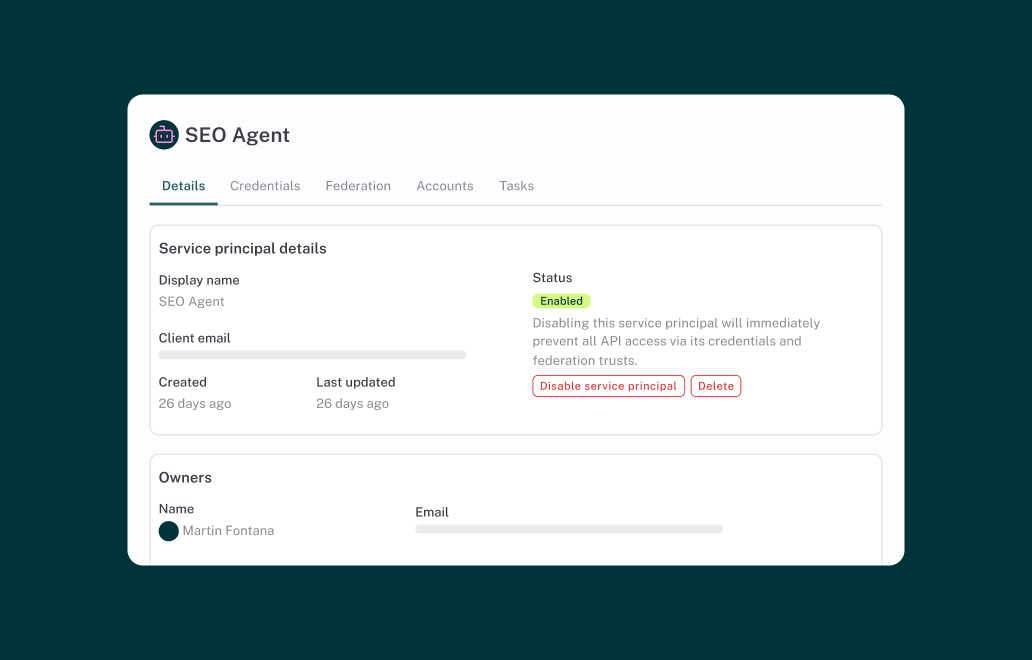
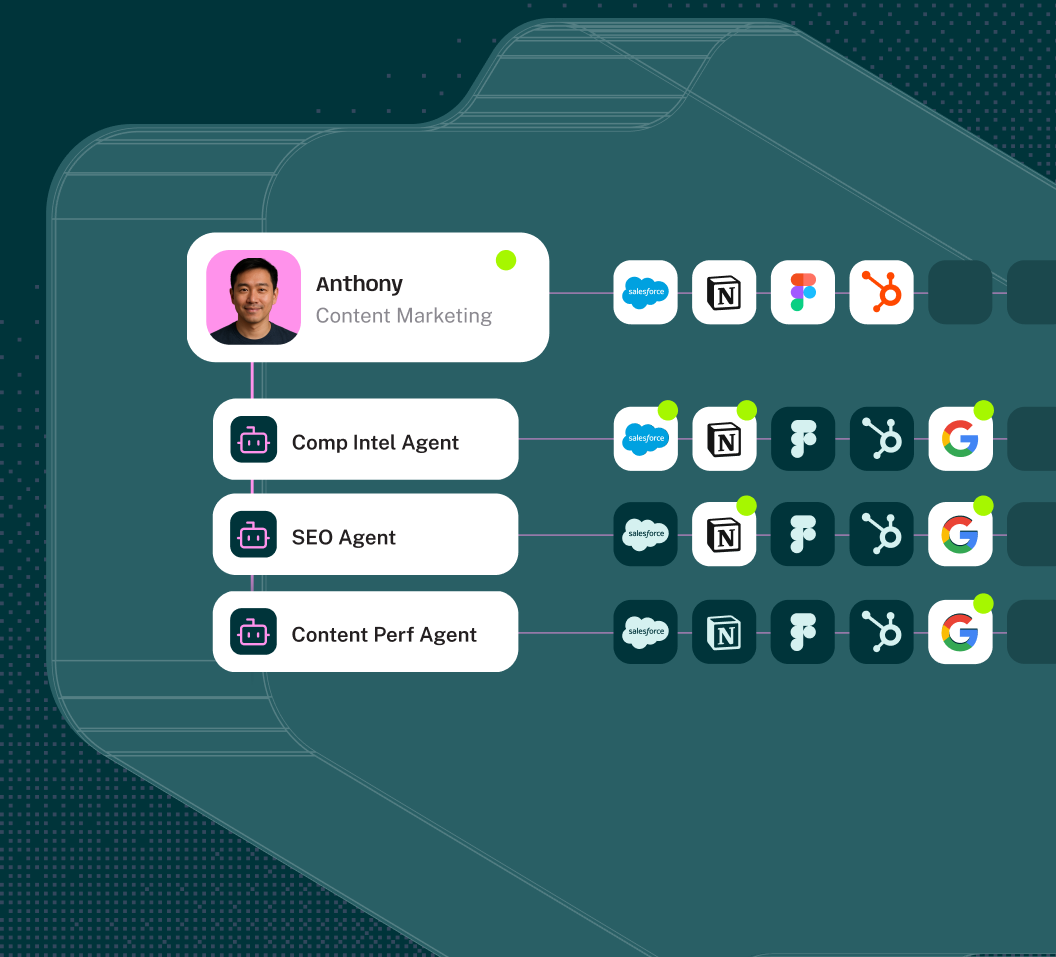
Agents governed as first-class identities
Personal AI assistants act under the user's identity. Enterprise agents run as C1 Service Principals — with owners, role assignments, and access reviews. Software agents use Workload Federation — short-lived, scoped C1 access exchanged for the platform's own identity. Nothing to store. Nothing to rotate. Nothing to leak.
Every tool. One control plane.
Off-the-shelf SaaS. Custom MCPs from your team. Same policy engine, same audit trail.


















Built different, by design.

Every integration is engineered, not enumerated.
Not a pass-through of an OpenAPI spec. C1 models each system — its objects, its tools, and what every action actually does. That model is what derives risk class, scopes policy, and catches breakage against the live vendor API before you hit it.

Pre-classified tools, out of the box.
Every tool in every integration ships with a risk class. Auto-approve reads. Require approval for writes. Deny destructive. No manual configuration required.

Every tool ships with CodeMode bindings.
A CodeMode program lets an agent chain many tool calls in one TypeScript script — fewer LLM round-trips, fewer tokens. Credentials stay vaulted, invisible to the LLM. Policy and audit apply per call; bindings come from our formal model.

Identity and access mutations stay governed.
If a tool would grant permissions or modify roles, it routes through C1's governance engine — your approval workflows intact, your audit trail unified.
A gateway stops the call. C1 governs it.
Standalone MCP gateways can block a tool call. They can't tell you who made it, what they're entitled to, or how it fits your broader security posture.
C1 is identity infrastructure. Humans, machines, and agents on one graph with one policy engine and one audit trail.
What separates C1 from MCP gateways?
Real workflows. Real results.
No ticket. No detour. No delay.
A developer needs Snowflake access while debugging in Cursor. They request it in Slack. Their manager approves in one tap. The agent connects in seconds.
Five analysts. One seat. Full audit.
Scope one vaulted credential to specific tools and share it across five users. Every call audited individually. Thousands saved per role per year on licensing alone.
Shadow AI under one policy.
78% of employees use AI tools you didn't approve. Route their MCP access through C1 instead of around it — one policy engine for every tool call, no matter the client.

Simple set up. Built to scale.
Register your MCP servers.
Pick from the C1 catalog, paste a URL for any native MCP, or bring your own — running in your cloud or on-prem.
Group tools into access profiles.
"Salesforce Read-Only for Sales." "Snowflake Production Queries." These become the units your team requests — and your policies govern.
Set policy per profile.
Auto-approve reads. Self-approval in Slack for writes. Manager approval for sensitive actions. Deny destructive. Per role, department, or agent.
Ship.
Users request from Claude Code, Cursor, Slack, or CLI. Access provisions in seconds. Every call logged. Every entitlement surfaces in standard access reviews.
Your data stays where it is.
Custom MCP servers and on-prem APIs, connected to C1 through a single outbound tunnel. No inbound firewall changes. No VPN. No certificate management.
No VPC to deploy. No on-prem control plane to maintain. No upgrade windows. Just your data, on your network, reachable from C1.
FAQs

Ship AI without shipping risk.
Latest on the platform
Blog
What MCP doesn't include: governance
MCP is the protocol everyone is racing to govern. But the protocol itself doesn't include governance. Identity, policy, audit, lifecycle — those still have to come from somewhere. Here's where they come from.